
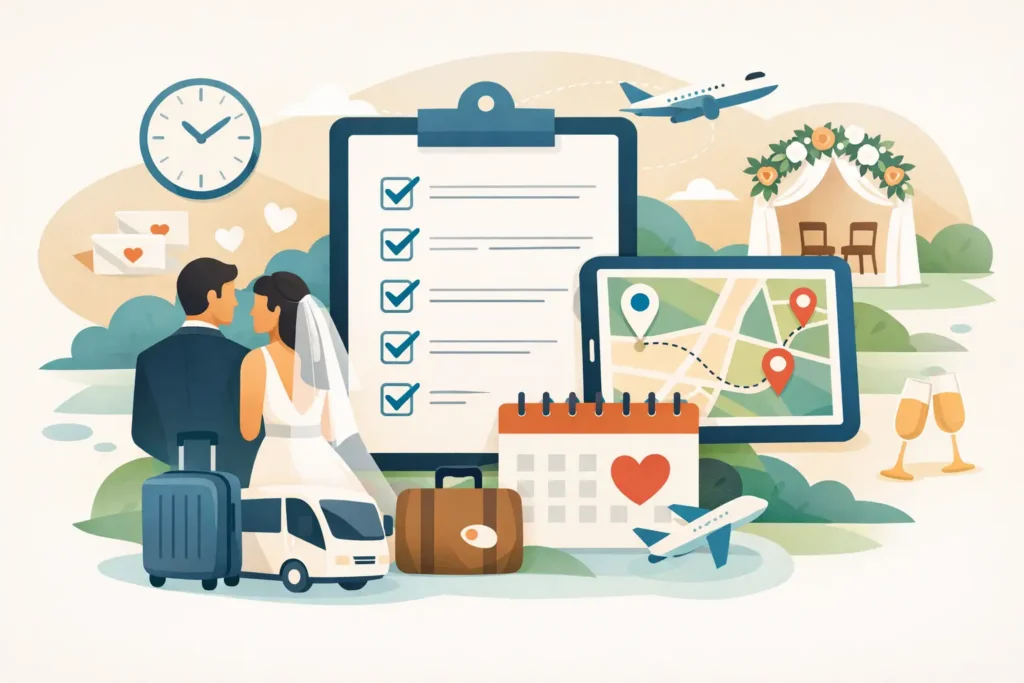
The first guest logistics problem usually shows up long before the wedding day. It starts when a cousin asks where to stay, a family friend wants to bring two extra people, and half the bridal party is flying in on different schedules. If you are figuring out how to organize wedding guest logistics, the real goal is not just keeping a spreadsheet updated. It is making every moving part feel considered, comfortable, and under control.
That level of organization shapes the entire guest experience. A beautiful ceremony can still feel stressful if parking is confusing, transportation is unclear, or out-of-town guests do not know where to go next. Strong planning removes friction. It helps your guests feel welcomed and lets you stay focused on the celebration instead of answering last-minute texts.
How to organize wedding guest logistics from the start
Wedding guest logistics work best when they are built early, not patched together in the final two weeks. Once your venue, date, and approximate guest count are set, guest coordination should become part of the planning process alongside catering, rentals, and entertainment.
Start with a master guest list that does more than collect names. You need categories that actually support decision-making. Track households, plus-ones, meal preferences, hotel needs, transportation needs, and whether guests are local or traveling. This is where details begin to matter. A guest list is not only for invitations. It becomes the foundation for seating, shuttle counts, welcome bags, and check-in support.
It also helps to separate what is fixed from what may change. Your ceremony start time is firm. Hotel pickup schedules may need adjustment. A polished plan leaves room for those variables without putting the whole event at risk.
Build your guest communication around real questions
Most guest confusion comes from incomplete communication, not from complicated events. People want to know where to be, when to arrive, what to wear, how to get there, and what happens after the ceremony. If that information is scattered across texts, emails, and family group chats, problems multiply fast.
Give guests clear guidance at each stage. Save-the-dates should alert travelers early. Invitations should confirm the essentials. Closer to the wedding, guests may need a more detailed timeline for shuttle departures, hotel check-in windows, parking instructions, and any weekend events tied to the celebration.
The key is clarity, not volume. Too much information all at once gets ignored. Too little creates a flood of questions. The right balance depends on your event. A ballroom wedding with one venue and valet parking requires less explanation than a weekend wedding with multiple hotels, a rehearsal dinner, and private transportation.
If you have a lot of out-of-town guests, hospitality planning deserves extra attention. They are not just attending a ceremony. They are navigating flights, rental cars, hotel arrivals, and unfamiliar locations. When communication is thoughtful, guests feel taken care of before they even arrive.
Prioritize the travel and lodging experience
For weddings with traveling guests, hotel coordination is often the biggest pressure point. Room blocks can be extremely helpful, but only if they match guest behavior. Some guests want convenience near the venue. Others care more about price. In a large Texas market where hotels can vary widely by neighborhood, offering one option may not be enough.
A good lodging plan usually includes a primary hotel and, when possible, another option at a different price point. That gives guests flexibility without making them do all the research themselves. Think through the distance to the venue, traffic patterns, late-night transportation, and whether guests will need rental cars.
Transportation and lodging should also be planned together. If you are hosting guests at one hotel but the venue is 30 minutes away, shuttle service may be worth the investment. If guests are spread across multiple properties, transportation becomes more complicated and may require a different approach. There is no universal right answer here. It depends on your guest mix, your venue location, and how much independence your guests will have.
Manage RSVPs like an operations tool
RSVPs are often treated like a simple headcount, but they affect nearly every guest-facing decision. Final catering numbers, escort cards, bar planning, seating charts, welcome gifts, and shuttle loads all depend on accurate responses.
That means your RSVP process should capture more than attendance whenever relevant. If guests need to choose meals, request accessibility accommodations, or indicate whether they are attending related events, collect that information upfront. Waiting until the final week creates avoidable scrambling.
Follow-up matters too. Some guests respond immediately. Others need reminders. The sooner you identify missing responses, the easier it is to make decisions with confidence. A well-managed RSVP system protects your budget just as much as it protects the guest experience.
Think through movement, not just moments
One of the most overlooked parts of how to organize wedding guest logistics is planning how people move through the day. Couples naturally focus on the ceremony, cocktail hour, and reception. Guests experience the in-between just as strongly.
How easy is it to arrive? Is signage clear? Will elderly relatives have a long walk from parking to the ceremony space? If the ceremony and reception are in different areas, how will guests know where to go next? If the event runs late into the evening, how will they return safely to their hotel?
These transitions affect the mood of the day. Smooth movement keeps energy high. Confusing movement creates delays, crowding, and frustration. This is especially true for larger weddings, outdoor venues, ranch properties, and events with multiple locations.
Guest flow should be mapped with the same care as the event timeline. Consider arrival windows, parking capacity, restroom access, weather backup plans, and any mobility needs among your guests. If children will attend, think about their pacing too. A wedding that feels elegant on paper still needs to function comfortably in real life.
Seating should support relationships and comfort
Seating charts are not just about fitting people into a room. They are about helping guests feel relaxed, included, and socially comfortable. The right table assignment can make the reception feel warm and effortless. The wrong one can create tension or leave guests disconnected.
Start with relationship groups, then layer in personality, age range, and energy level. Older relatives may appreciate quieter tables away from speakers or heavy traffic. Friends who are ready to celebrate may enjoy being close to the dance floor. Divorced family dynamics, new partners, and long-standing tensions should be handled carefully and discreetly.
This is one area where details matter more than aesthetics. A visually balanced floor plan is helpful, but guest comfort comes first. If you are inviting a wide mix of family, friends, coworkers, and family friends, the seating chart deserves focused attention rather than a rushed decision at the end.
Plan for guest support on the wedding day
Even with excellent preparation, guests will still have questions on the day of the event. Someone will not know where to park. Someone else will arrive early. A relative may need help finding their seat. Those moments do not mean the plan failed. They mean your event needs visible support.
Designate clear points of contact so guests are not relying on the couple, parents, or wedding party for every issue. This can include venue staff, transportation leads, or a planner managing arrivals and transitions. At Adam’s Event Planning, this is often where clients feel the greatest relief, because logistics stop living in family text threads and start being handled professionally in real time.
Onsite coordination is what turns a well-built plan into a polished guest experience. It allows problems to be solved quickly and quietly. That matters because guests remember how an event felt, not just how it looked.
Expect a few adjustments and plan for them
No wedding is perfectly static. Flight delays happen. A guest cancels last minute. Weather changes the outdoor plan. The point of strong logistics is not perfection. It is resilience.
Build a plan that can absorb minor changes without creating major disruption. Keep your guest information current. Confirm final numbers with enough margin to adjust. Make sure your vendor team understands the timeline, the guest count, and any special accommodations. The more aligned your team is, the calmer the event feels.
That is also why guest logistics should never be left as an afterthought. They sit at the intersection of hospitality, timing, design, and execution. When they are handled well, your wedding feels gracious and easy from the first arrival to the final sendoff.
A beautiful wedding should not ask guests to figure everything out for themselves. When you organize their experience with care, you create the kind of celebration people remember for all the right reasons.