
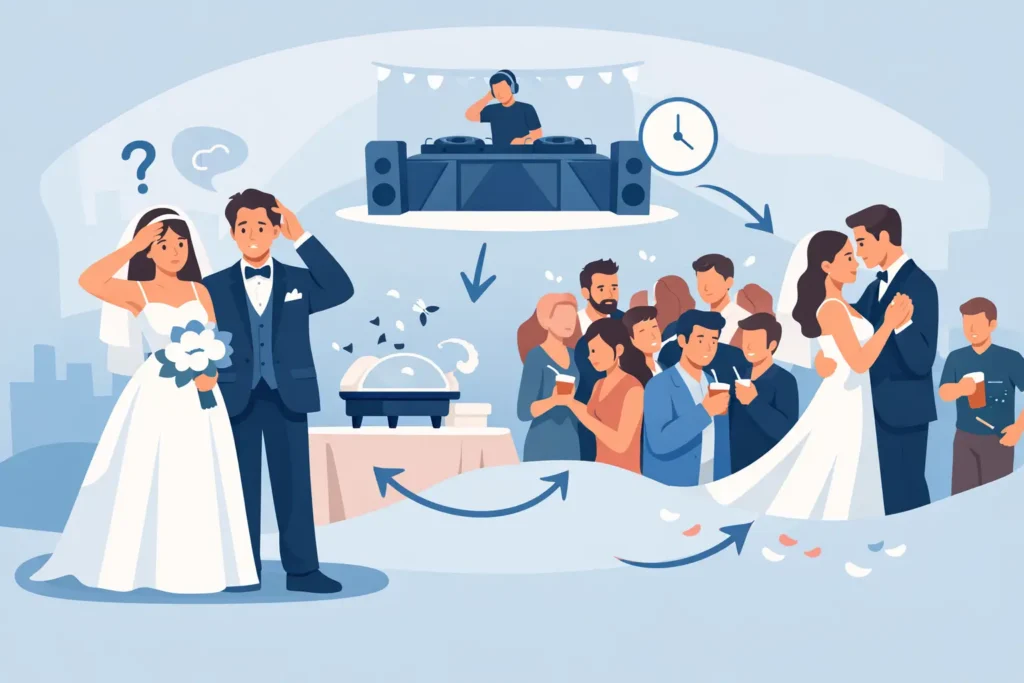
A beautiful reception can lose energy in less than ten minutes. Guests arrive at the ballroom with drinks in hand, but there is nowhere to sit. Dinner is ready, yet the wedding party is still taking portraits. The DJ is prepared to start dancing while half the room is waiting in line for dessert. These are the top wedding reception flow mistakes couples rarely picture when choosing flowers, linens, or a first-dance song, but they are the details guests remember.
Reception flow is not about making every minute feel scheduled. It is about giving your guests clear places to be, something worthwhile to do, and enough time to enjoy each part of the celebration. A well-built timeline protects the experience you have worked so hard to create.
Top Wedding Reception Flow Mistakes Guests Notice First
Starting cocktail hour before there is a real plan for it
Cocktail hour often has two jobs: entertain guests and give the couple time for photos. It works beautifully when both needs are planned together. It becomes frustrating when guests are sent to a small space without enough seating, shade, beverages, or food while portraits run long.
Think through the setting as carefully as the reception room. For an outdoor Texas wedding, heat, wind, and distance between spaces matter. Offer water alongside cocktails, provide adequate shade when possible, and make sure elderly guests and families with young children have a comfortable place to sit. If the bar opens immediately but passed appetizers arrive twenty minutes later, guests will notice.
Photo timing deserves equal attention. A first look can create more flexibility, but it is not the right choice for every couple. If you prefer to wait until the ceremony to see one another, build a realistic portrait window and give cocktail-hour guests a meaningful experience rather than simply asking them to wait.
Creating bottlenecks at the entrance, bar, or buffet
A reception can have a generous guest count and still feel overcrowded because people are funneled through one narrow point. Common trouble spots include a single bar for a large room, escort cards placed directly at the entry, a buffet stationed too close to the dance floor, or a guest book table that blocks the main path.
Walk the venue as a guest would. Where do people enter? Where will they set down a drink? How will they find their table? Can a server move through the room once chairs are filled? The answers influence the floor plan, not just the décor.
For a larger wedding, two smaller bars or a bar plus a dedicated water station may serve guests better than one dramatic central bar. Buffet service can be efficient when tables are released in waves and there is room for two lines. A plated dinner may feel more formal and keeps guests seated, but it requires a caterer and service staff who can manage timing well. The best choice depends on your venue, guest count, menu, and the atmosphere you want to create.
Letting introductions run too long
Grand entrances can be joyful, especially when the wedding party is excited and the music fits the room. The problem begins when every entrance becomes a separate production, followed by multiple speeches, a first dance, parent dances, and an immediate dinner blessing. Guests can spend the first half hour seated without food, drinks, or a chance to reconnect.
Choose the moments that matter most to you. A full wedding-party introduction can be worth it for a high-energy celebration, while an intimate wedding may feel more natural with the couple entering alone. Keep the energy moving by coordinating the DJ, catering captain, photographer, and planner around one clear order of events.
If speeches are planned before dinner, limit the number and set expectations with speakers in advance. A heartfelt toast does not need ten minutes to make an impact. Often, two or three well-timed remarks are more memorable than a long open-mic format.
Do Not Make Guests Choose Between Dinner and Key Moments
Scheduling formalities during meal service
One of the most common top wedding reception flow mistakes is placing every major tradition between courses. Guests are asked to stop eating for the first dance, stop again for a toast, then turn toward the cake while their entrée cools. Meanwhile, the couple is pulled in several directions and may barely eat at all.
Your reception should have a rhythm. Once dinner begins, let guests enjoy it. Brief welcome remarks or a blessing can happen just before service, and a well-placed toast between courses can work for a plated meal. Save longer speeches, cake cutting, or dancing for a time when catering is not actively serving the room.
This is especially important for buffet dinners. Releasing tables, waiting in line, returning to seats, and eating already takes time. Interrupting that process leaves some guests watching a tradition while others are still trying to find their meal. A thoughtful planner coordinates closely with the caterer so the schedule reflects how service will actually unfold, not how quickly it looks on paper.
Opening the dance floor too late
Many couples want a full dance floor, yet unintentionally delay it with a long sequence of late-night formalities. When dancing finally begins, older relatives may be ready to leave and the initial energy has faded.
Consider opening the dance floor shortly after dinner, once the first dance and parent dances are complete. Then let people dance for a meaningful stretch before calling attention to the cake, bouquet toss, anniversary dance, or another tradition you have chosen. Not every wedding needs every tradition. Prioritizing the ones that feel personal gives the evening more room to breathe.
Your DJ or band should also know the crowd you expect. A multigenerational guest list benefits from music that invites different ages onto the floor early. A smaller group of close friends may prefer a more relaxed lounge atmosphere before the party builds. There is no single correct reception timeline, but there should be an intentional one.
Forgetting the couple’s own experience
Couples are often surprised by how little they see of their reception when there is no one protecting their time. Guests want photos, vendors need answers, and relatives may have last-minute requests. Without a point person, the couple becomes the event manager instead of the guest of honor.
Build in a private ten-minute pause after the ceremony or during the room reveal. Set aside a plated meal or arrange for the catering team to serve you promptly. Let your planner, venue coordinator, or a trusted designated contact handle questions that do not require your attention.
This is not about disappearing from your guests. It is about being present when you are with them. A couple who has eaten, taken a breath, and seen the room they designed is far more likely to enjoy the dance floor and the final hour of the night.
Plan the Exit Before the Last Song
The end of the reception deserves the same care as the entrance. A rushed exit can create confusion when guests do not know where to gather, transportation is not ready, or personal items are still spread across the venue. It can also leave vendors waiting for decisions about gifts, décor, leftovers, and final payments.
Decide whether you want a formal send-off, a private last dance, or simply a strong closing song. Communicate the plan to your photographer, DJ, transportation team, and venue staff. If you are using sparklers, confetti, or another exit element, confirm venue policies and assign someone to distribute supplies and guide guests safely.
Before the celebration starts, identify who takes home cards and gifts, who collects personal décor, and who has authority to approve any final changes. These quiet logistics let you leave with the people you love instead of spending your last moments tracking down a missing card box.
A polished reception does not feel rigid. It feels generous, comfortable, and full of well-timed moments. When every vendor understands the same plan and someone is watching the transitions, you are free to focus on what matters most: celebrating with the people who came to celebrate you. Adam’s Event Planning can help turn that vision into a reception that feels personal, calm, and beautifully cared for from the first welcome drink to the final farewell.