
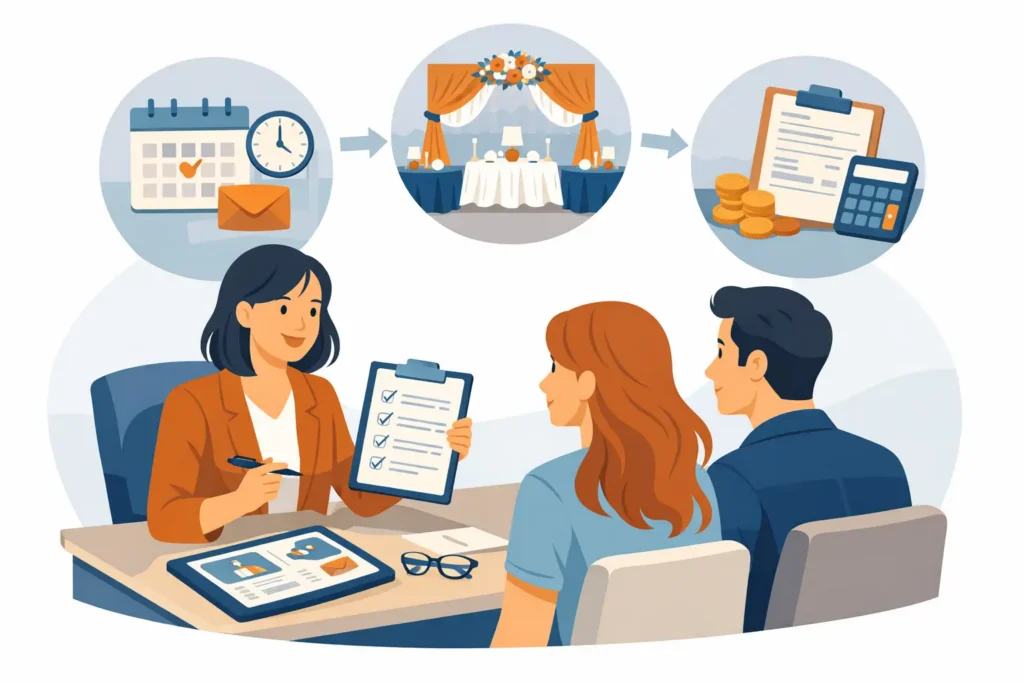
A great consultation should leave you feeling lighter, not buried under a new stack of decisions. If you are wondering what follows an event consultation, the answer is a carefully organized path from your initial ideas to an event that feels personal, polished, and fully managed.
Whether you are planning a wedding in San Antonio, a nonprofit gala in Houston, a corporate launch in Austin, or a quinceañera for your family, the consultation is where your vision takes shape. The work that follows is where that vision becomes an actionable plan with the right people, priorities, and details behind it.
What Follows an Event Consultation?
After the first conversation, your planner reviews what matters most to you: the purpose of the event, guest count, preferred date or timing, budget range, style, location, and the experience you want guests to have. This is more than collecting a checklist. It is how a planning team learns whether your event calls for a dramatic ballroom transformation, a relaxed outdoor celebration, a high-energy fundraising program, or a refined corporate environment.
The next step is usually a tailored proposal or planning recommendation. It outlines the services that fit your needs, such as full-service planning, event production, vendor coordination, design, staffing, guest management, or day-of support. A couple with a venue already booked may need a different level of involvement than a family beginning with only a date and a dream.
This is also the time to clarify expectations. Your planner should be transparent about what is included, where decisions will be needed from you, how communication will work, and what investment is realistic for the event you want to create. Good planning protects both your vision and your budget from the beginning.
Turning Your Ideas Into a Clear Event Plan
Once you decide to move forward, the planning process begins with a more detailed discovery phase. You may share inspiration photos, brand guidelines, family traditions, guest needs, favorite colors, entertainment preferences, or concerns from past events. For organizations, this can include fundraising goals, program requirements, sponsorship needs, and attendee flow. For social events, it often includes meaningful details that make the celebration feel unmistakably yours.
From there, your planner establishes the framework: a working budget, planning timeline, design direction, and priority list. Not every decision needs to happen at once. In fact, trying to make every choice during the first few weeks can create unnecessary stress and lead to rushed spending.
A strong plan identifies what must be secured first. Venue availability may drive the date. A sought-after band, photographer, caterer, or keynote speaker may need an early commitment. If your budget is fixed, the team may recommend putting more of it toward the elements guests will remember most, such as food, entertainment, atmosphere, or hospitality, rather than spreading funds too thinly across every detail.
Building a Budget That Supports Your Priorities
A budget is not simply a number on a spreadsheet. It is a decision-making tool. It helps determine the scale of the event, the level of production, the type of venue, and which creative details are worth prioritizing.
Your planner will help account for both obvious costs and the items clients can easily overlook, including service charges, taxes, rentals, staffing, valet, transportation, security, insurance, audiovisual needs, décor installation, gratuities, and contingency funds. The goal is not to remove every surprise from event planning, because some changes are unavoidable. The goal is to make informed choices early enough that a change does not disrupt the whole event.
There are trade-offs in every event. An intimate guest list can create room for elevated dining or customized décor. A larger event may call for a streamlined design approach and a venue built for efficient guest movement. Neither choice is automatically better. The right choice is the one that serves your occasion and your guests.
Venue and Vendor Coordination Begins
For many clients, securing the right venue is the first major milestone after signing on with a planner. The ideal space needs to support more than the look you have in mind. It must work for guest capacity, parking, accessibility, catering requirements, production needs, event timing, and the overall flow of the day or evening.
Once the venue is selected, vendor sourcing and coordination become more focused. Depending on your event, this can include catering, florals, rentals, photography, videography, music, DJs, bands, lighting, draping, transportation, cake design, invitations, security, and specialty entertainment. A full-service planner helps evaluate options based on fit, reliability, quality, and budget, not just a beautiful social media feed.
Vendor management is one of the clearest ways professional planning reduces pressure. Instead of tracking multiple contracts, deposits, delivery windows, setup requirements, and last-minute questions on your own, you have a central point of coordination. At Adam’s Event Planning, that coordination is designed to keep the moving pieces connected while you stay informed without having to manage every detail personally.
Design Comes to Life in Layers
Event design is not limited to choosing a color palette. It is the way the event feels from the moment guests arrive. It can include the entry experience, lighting, lounge areas, tabletop details, stage design, signage, floral moments, dance floor energy, and the pacing of the program.
After the consultation, your planner begins translating your preferences into a cohesive creative direction. A wedding may call for romantic texture and personal storytelling. A quinceañera might balance tradition, family pride, and a bold celebration. A corporate event may need to reinforce a brand while making guests feel welcomed and energized. A gala can require an elegant setting that supports both donor recognition and fundraising activity.
This process is collaborative, but it should not feel like another full-time job. Your planner brings curated choices and professional recommendations so you can make confident decisions without sorting through endless possibilities.
The Planning Timeline Gets More Detailed
As the event approaches, broad ideas become precise logistics. The planner develops timelines for vendor arrivals, setup, rehearsals, guest check-in, catering service, speeches, entertainment, transitions, and breakdown. They confirm floor plans, review final counts, organize seating or registration details, and make sure every partner understands their role.
For an event with a program, this stage includes run-of-show planning. Who takes the stage first? When does dinner begin? How long should the auction, toast, presentation, or surprise performance last? Where will the wedding party stand? What happens if a speaker runs long or a vendor arrives late?
These details may sound small, but they shape the guest experience. A well-timed event feels relaxed and effortless because someone has thought through the transitions before guests ever enter the room.
Onsite Management Protects the Experience
The day of the event is not the moment for you to become the point person for deliveries, table placement, missing linens, sound checks, or schedule changes. Your role should be to welcome guests, celebrate the milestone, speak with donors, or focus on the people your event is meant to honor.
An onsite planning and production team oversees setup, directs vendors, checks the design, manages the timeline, assists with guest concerns, and handles unexpected issues with calm professionalism. Some events need a small coordination team. Others require production staff, hospitality support, security coordination, registration management, or a larger crew working behind the scenes.
No event is completely immune to changes. Weather can shift, a guest may need extra assistance, traffic can delay an arrival, or a program can take an unexpected turn. The value of professional management is having a prepared team that can respond without allowing those moments to become your problem.
The Work Continues After Guests Leave
Post-event support may include vendor wrap-up, rental returns, final payment review, item collection, and a debrief on what worked especially well. For nonprofits and corporate teams, it can also include reviewing attendance, donor experience, guest feedback, or operational lessons for the next event.
The consultation begins a relationship built around your goals, but the best outcome is not a binder full of completed tasks. It is the confidence that every decision has been guided by a team that understands your event matters. Start with the vision you have now, and let thoughtful planning create the room for you to enjoy the moment when it arrives.