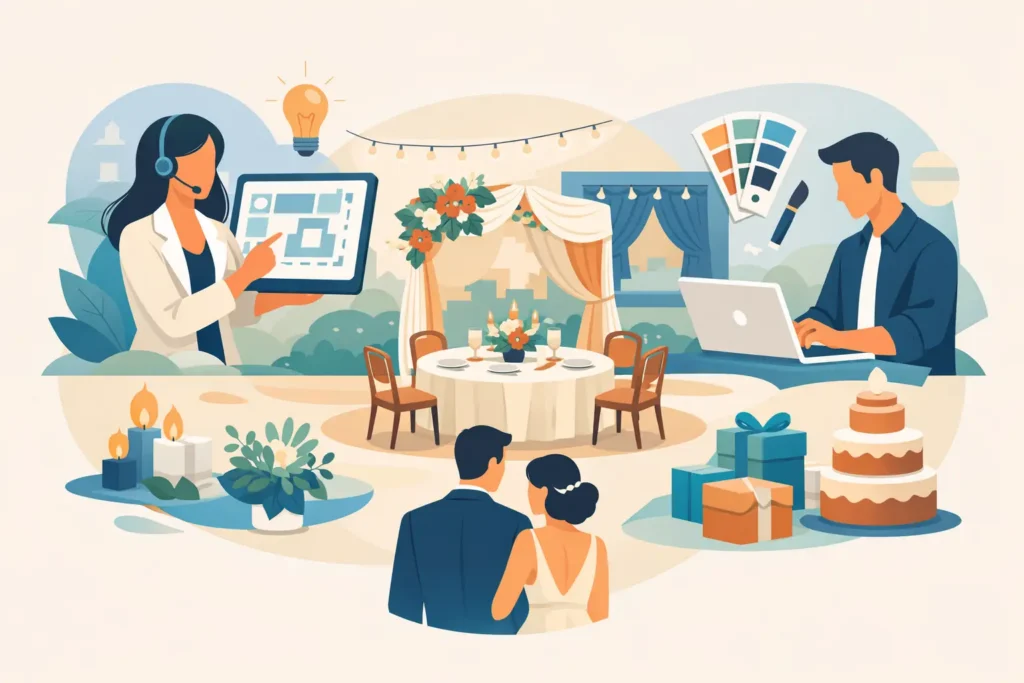
A beautiful event is never just about pretty tables or a well-placed floral arrangement. The strongest celebrations and business gatherings feel intentional from the moment guests arrive. That is where custom event design services make a real difference – they turn a vision into an experience that looks polished, feels cohesive, and supports the purpose of the event.
For some clients, that purpose is emotional. A wedding should feel personal. A quinceañera should reflect family tradition and individual style. A milestone birthday should feel joyful without looking thrown together. For others, the goal is strategic. A nonprofit gala needs to inspire generosity. A corporate launch should reinforce the brand. In both cases, design is doing more than decorating. It is shaping how people experience the event.
What custom event design services include
When people hear the word design, they often think only of color palettes, linens, and centerpieces. Those details matter, but custom event design services go much further. Good design considers the full environment – what guests see, how they move through the space, where key moments happen, and how every element works together.
That can include layout planning, stage styling, lighting direction, tablescapes, lounge areas, signage, entry moments, dance floor design, ceremony backdrops, and visual coordination across vendors. It can also influence practical decisions such as which venue fits the concept best, how a room should be flipped between event phases, or where a bar or buffet should sit to keep traffic flowing.
The word custom matters. A custom design approach is built around the client, the guest list, the venue, and the goals of the event. It is not a copy-and-paste package. A ballroom in Houston calls for a different design strategy than an outdoor ranch celebration near San Antonio. A black-tie fundraiser in Austin should not be styled like a Sweet 16, even if both need strong production value.
Why custom event design services matter beyond appearance
The most common mistake people make is treating design as an extra rather than a core part of planning. In reality, design influences comfort, timing, energy, and guest engagement.
A well-designed corporate event helps attendees know where to check in, where to network, and where to focus their attention. A well-designed wedding makes transitions feel natural, so guests are not left wondering where to go next. A well-designed gala supports fundraising because the room feels elevated, the stage is visible, and the atmosphere reinforces the importance of the mission.
There is also a practical benefit. When design is planned early, it helps avoid expensive last-minute decisions. Clients often assume they can handle the look of the event later, after the venue and vendors are booked. Sometimes that works. Often, it creates problems. A venue may not support the desired lighting plan. Rentals may need to change to fit the room scale. A floral concept may exceed the budget once linen, furniture, and installation needs are factored in.
Custom design done well protects both the vision and the budget. It gives the event a clear direction before money is spent in too many competing places.
Custom event design services for different event types
Not every event needs the same level of design complexity. That is why the best planning teams do not force every client into one formula.
Weddings and social celebrations
For weddings, design often begins with the couple’s style, but it also needs to reflect how they want people to feel. Some want timeless elegance. Others want modern energy, soft romance, or bold color. A good design plan translates those preferences into real decisions about ceremony structure, reception layout, florals, rentals, lighting, and guest experience.
The same is true for quinceañeras, Sweet 16 celebrations, anniversaries, and birthday parties. These events are personal, which means design should never feel generic. At the same time, it still needs professional discipline. A concept can be playful or glamorous while staying organized, balanced, and appropriate for the space.
Corporate events
Corporate design has a different job. It should support the brand, the audience, and the business objective. For a conference, that may mean clean stage design, branded signage, intentional seating, and networking zones that feel polished without becoming distracting. For a product launch or company celebration, design can be more immersive, but it still has to stay aligned with the message.
This is where experience matters. Business events have less room for visual choices that interfere with function. A dramatic installation may look impressive, but if it blocks sightlines or slows guest movement, it creates more problems than value.
Nonprofit galas and fundraisers
For nonprofits, design needs to balance beauty with purpose. Guests should feel welcomed and inspired, but the event should also guide attention toward the mission. Stage placement, lighting, décor, donor recognition, and auction display all work better when they are part of a single design strategy.
This category often involves tighter financial decisions. It depends on the event. Some organizations want high-impact visual moments, while others need a refined, cost-conscious approach that still feels special. Custom design helps prioritize where the budget creates the strongest return.
How the design process should work
Strong design starts with listening. Before anyone chooses flowers or furniture, the planner should understand the event type, budget, venue constraints, timeline, guest count, and priorities. A clear concept only works when it fits real conditions.
From there, the design process usually moves into visual direction and event planning decisions that support it. That may include mood boards, proposed layouts, rental recommendations, décor plans, entertainment coordination, and production elements such as lighting or staging. The design becomes stronger when it is developed alongside logistics rather than treated as a separate track.
This integrated approach saves clients time and stress. It also reduces the back-and-forth that happens when multiple vendors are each interpreting the event differently. When one team is guiding the overall plan, the florist, rental company, caterer, venue staff, entertainment team, and production partners can work toward the same outcome.
That level of coordination is especially valuable for larger or high-pressure events. When timelines are tight or expectations are high, clients need more than ideas. They need follow-through.
What to look for in a design-focused event planner
If you are considering custom event design services, the right partner should bring both creativity and control. You want someone who can create a strong visual direction, but also manage the details that make the event function smoothly.
Ask how they approach design from concept to execution. Ask whether they coordinate vendors directly, manage rentals, oversee installation, and stay onsite to ensure the room is set correctly. Beautiful ideas are only useful if they are carried through consistently.
It also helps to ask how they work with different budgets. Custom does not always mean extravagant. It means intentional. An experienced planning team can often create more impact by focusing resources on the areas guests notice most, rather than spreading the budget too thin across every detail.
You should also pay attention to communication. Design decisions affect many moving parts, so clients need clarity, responsiveness, and honest guidance. If something will not work in a venue or does not make sense for the budget, a good planner says so early and offers better options.
Why full-service support makes design stronger
Design is at its best when it is backed by full-service planning and production. That connection matters because the event experience is never only visual. It includes timing, hospitality, staffing, setup, transitions, and problem-solving.
A stunning reception loses impact if guests wait too long for service or if the room is not ready on time. A branded corporate event feels less polished if signage is inconsistent or the stage setup changes at the last minute. A beautiful gala can lose momentum if registration, seating, and program flow were not coordinated with the room design.
That is why many clients prefer a team that can handle planning, production, décor coordination, vendor communication, and onsite management together. Adam’s Event Planning takes that full-service approach because clients deserve more than inspiration boards. They deserve an event that feels thoughtful from beginning to end.
Custom design should make your event more personal, more polished, and easier to enjoy – not more complicated. Whether you are planning a wedding, a fundraiser, a corporate gathering, or a milestone celebration, the right design support helps every choice feel more intentional. When the room reflects your vision and the experience runs the way it should, guests notice – and so do you.