
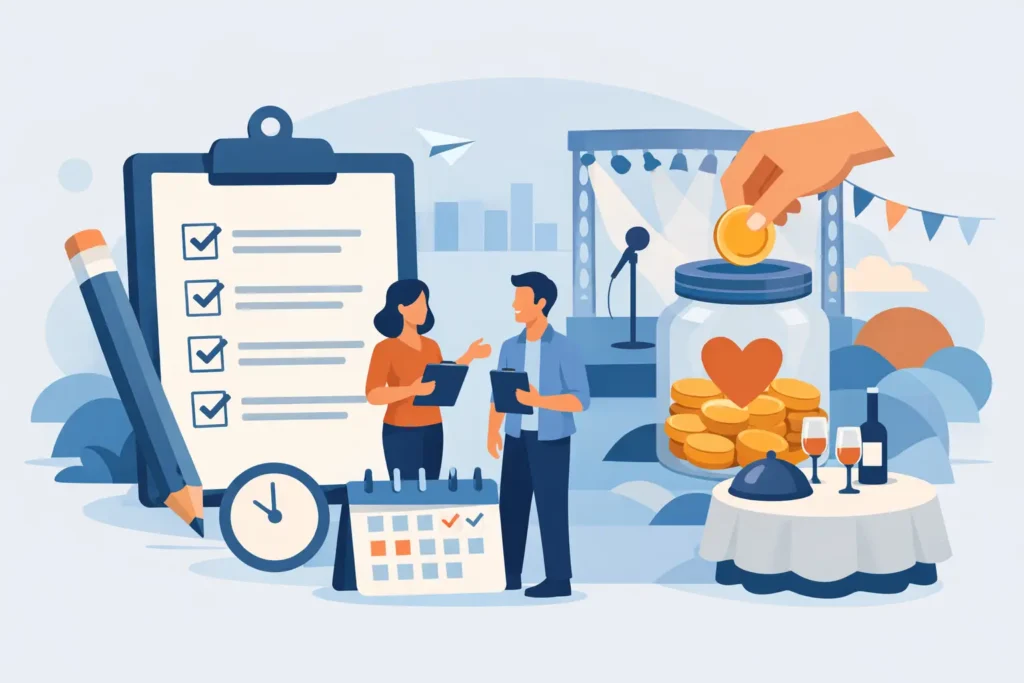
When a fundraising event falls flat, it is rarely because the cause was not compelling. More often, the details did not support the mission. A strong fundraising event planning checklist keeps your team focused on what actually drives results – donor confidence, a smooth guest experience, and a clear path from invitation to giving.
Fundraising events carry a different kind of pressure than social celebrations or standard corporate functions. You are not just hosting a beautiful evening. You are asking people to show up, connect emotionally, and take action. That means every planning choice, from venue flow to program timing, has a direct impact on revenue.
What a fundraising event planning checklist should cover
A useful checklist is not just a task list. It should help you make better decisions early, when changes are easier and less expensive. For most nonprofit galas, luncheons, golf tournaments, and donor appreciation events, your planning needs to cover strategy, budget, guest management, vendors, production, staffing, and follow-up.
The first question is simple: what is this event meant to accomplish? Sometimes the answer is maximum dollars raised that night. Sometimes it is donor cultivation, sponsor visibility, or community awareness. Those goals are related, but they are not identical. An event built to deepen relationships may look very different from one designed around ticket sales and a live appeal.
Once the goal is clear, the rest of the checklist becomes easier to prioritize. If sponsorship is a major revenue source, sponsor benefits and visibility need to be designed early. If individual giving during the event is critical, your run of show, storytelling, and donation process deserve extra attention.
Start with goals, budget, and internal alignment
Before anyone tours venues or requests catering proposals, align your leadership team. Confirm your fundraising target, event format, audience size, and ideal guest profile. It also helps to define what success looks like beyond total dollars raised. You may want a certain number of new donors, sponsor renewals, or post-event meetings with major prospects.
Your budget should reflect the financial reality of the event, not just the creative vision. Estimate fixed costs such as venue rental, catering minimums, audiovisual production, rentals, entertainment, décor, printing, staffing, security, and photography. Then compare those expenses against projected revenue from sponsorships, ticket sales, table sales, auction proceeds, paddle raise donations, and matching gifts.
This is where many teams get stuck. They want an elevated guest experience, but they also need a healthy return. That balance matters. Spending more can increase donor confidence and attendance, but only when the upgrades support the fundraising strategy. A dramatic stage design might be worthwhile for a large gala with major sponsors. For a smaller donor dinner, personalized hospitality and a well-executed program may matter more than visual scale.
Build the right timeline for your event type
A fundraising event planning checklist is only as strong as its timeline. A formal gala may need six to twelve months of lead time, especially if you are securing sponsors, entertainment, and custom production. A luncheon or community fundraiser may move faster, but it still needs a structured schedule.
Early planning should focus on venue selection, date confirmation, budget approval, sponsorship outreach, and major vendor booking. The middle phase is where invitations, registration setup, auction procurement, design decisions, menu planning, and program development take shape. In the final weeks, the work becomes more operational – seating, guest communication, final counts, signage, staffing assignments, load-in schedules, and contingency planning.
If your team is small, timeline discipline matters even more. It is easy to spend too much time discussing décor while donor outreach slips behind. The event should look polished, but fundraising momentum cannot be treated as a last-minute task.
Choose a venue that supports giving, not just attendance
A beautiful venue is helpful. A functional venue is essential. The right space should support registration, sponsor recognition, guest comfort, stage visibility, catering service, and donation moments without confusion or bottlenecks.
Think carefully about arrival flow. If check-in is slow or disorganized, guests start the evening frustrated. Consider where cocktails, silent auction displays, sponsor signage, and restrooms are located. If you are planning a live appeal, sightlines and sound quality matter more than many organizations realize. Guests cannot respond well to a message they cannot hear or a screen they cannot see.
Parking and accessibility also affect turnout. A downtown ballroom may feel impressive, but if parking is difficult and entry is confusing, attendance can suffer. For some events, a hotel venue offers convenience and built-in service support. For others, a museum, ranch, or private estate creates a more distinctive experience. The best choice depends on your donors, your brand, and how formal the event needs to feel.
Secure vendors who understand nonprofit events
Not every great event vendor is the right fit for a fundraiser. Your caterer, AV team, entertainment, rental company, florist, photographer, and registration support all need to understand that timing and donor engagement are part of the event’s success.
Catering should be efficient and guest-friendly. Long meal service can delay your program and reduce giving energy. AV is especially critical. Poor microphones, weak lighting, or cueing mistakes can undercut an otherwise strong appeal. If you are using videos, live auction software, mobile bidding, or sponsor reels, test every element in advance.
Vendor selection should also account for responsiveness and professionalism. A lower bid is not always the better value if the team is slow to communicate or inexperienced with high-pressure timelines. Fundraising events often involve many moving parts at once, and dependable partners make a measurable difference.
Create a guest experience that feels polished and personal
Donors notice details. They notice whether the invitation feels thoughtful, whether check-in is welcoming, whether the room is comfortable, and whether the program respects their time. A polished event does not have to feel stiff. It should feel intentional.
Your communications should be clear from the beginning. Guests need to know when to arrive, what to wear, where to park, and what to expect. If they are sponsoring a table, they also need deadlines for guest names, logo submissions, and benefit selections. Strong communication reduces confusion for your team and creates confidence for attendees.
Inside the event, think about emotional pacing. Guests need time to connect and enjoy themselves, but they also need to understand why they are there. The most effective fundraising programs blend hospitality with purpose. That may include mission-driven video, a client story, a strong emcee, carefully timed remarks, and a clear call to give.
Plan the fundraising moments with intention
This is where checklist discipline pays off. Donation opportunities should never feel improvised. Whether you are using mobile giving, pledge cards, text-to-donate, a silent auction, a live auction, or a paddle raise, the process must be easy to understand and simple to complete.
Make sure guests know how to participate before the key moment begins. Train staff and volunteers to answer questions quickly. Confirm who is monitoring bids, who is processing payments, and who is troubleshooting registration or technology issues.
It also helps to be realistic about attention span. A long program can reduce energy in the room. A short, well-produced appeal often performs better than a drawn-out one. If you include an auction, choose items that fit your audience and revenue goals. More items do not always mean more money. In many cases, a smaller, stronger package selection creates better results and less administrative burden.
Staffing, floor plans, and event-day control
Even the best plan needs strong execution on event day. Assign ownership for every key area, including vendor load-in, registration, sponsor hospitality, stage management, guest seating, auction oversight, and breakdown. If everyone is responsible, no one is fully responsible.
A detailed floor plan helps prevent common problems. Tables should allow clear service paths and good views of the stage. Auction displays need enough space for browsing. Staff should know where supplies, signage, and emergency contacts are located. Build a run of show that includes every cue, from doors opening to final remarks.
Contingency planning matters too. Weather issues, delayed vendors, absent speakers, and technology problems happen. What matters is whether your team has a backup plan. Calm, prepared event management protects both guest experience and fundraising performance.
Do not treat follow-up as an afterthought
The event may end when the ballroom clears, but donor stewardship is just getting started. Thank-you communication should go out promptly, with messaging tailored to attendees, sponsors, donors, and volunteers when possible. Accuracy matters here. Gift totals, names, and sponsor recognition should all be checked carefully.
Review your event while details are still fresh. Compare projected revenue to actual performance. Identify what worked, where guests experienced friction, and which sponsors or donors need personal outreach. That information is what turns one successful fundraiser into a stronger annual event.
For organizations that want a refined, well-managed donor experience, professional planning support can make the difference between simply getting through the night and hosting an event that truly moves people to give. If your team is juggling sponsorships, logistics, production, and guest management all at once, Adam’s Event Planning can help with that.
The best fundraising events do more than raise money. They make people feel confident in your mission, cared for as guests, and excited to stay connected long after the final applause.