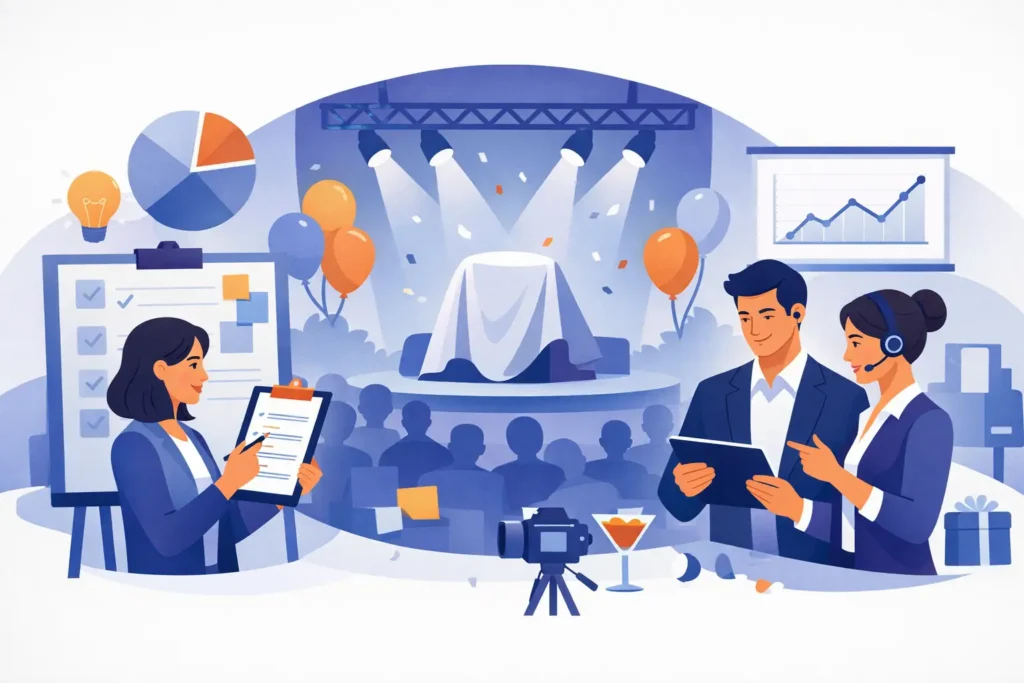
A launch can look exciting from the outside – the stage, the reveal, the energy in the room – but the real pressure starts long before guests arrive. A skilled product launch event planner is there to turn a high-stakes business moment into an organized, on-brand experience that supports your goals instead of distracting from them.
When a company is introducing a new product, there is very little room for guesswork. Sales teams need the right audience in the room. Marketing wants strong visuals and clear messaging. Leadership wants the event to reflect the brand at its best. At the same time, someone still has to manage the venue, catering, AV, signage, staffing, timelines, guest flow, and the hundred small details that can affect how the launch is remembered. That is where professional planning makes a measurable difference.
Why a product launch event planner matters
A product launch is not just another corporate gathering. It is part brand statement, part logistical operation, and part guest experience. If one piece is weak, the entire event can feel less effective than it should.
The strongest launches feel intentional from the first invitation to the final follow-up. Guests understand why they were invited. The environment supports the product story. Presenters know where to be and when. Demonstrations happen without technical confusion. VIPs receive the right level of attention. Nothing feels rushed, random, or disconnected.
That level of control does not happen by accident. It comes from planning that starts with objectives, then builds every event element around them. Sometimes the goal is media attention. Sometimes it is buyer confidence, investor visibility, distributor excitement, or customer engagement. A planner helps define what success looks like and then manages the event to match it.
What a product launch event planner actually handles
Many clients first think about the obvious pieces – venue selection, décor, catering, and the event schedule. Those matter, but they are only part of the job.
A product launch event planner typically begins with strategy. That means understanding the audience, the product, the brand message, and the result the company wants from the event. A launch for a luxury product will be designed differently from a launch for a technology platform or a nonprofit initiative. The planner shapes the format accordingly, whether that means a private preview, a press event, a customer-facing celebration, or a multi-layered corporate experience.
From there, the work becomes highly detailed. Budget management is one of the most valuable pieces. It is easy for launch events to overspend in the wrong places, especially when last-minute upgrades start appearing. A planner helps allocate funds where they create the strongest impact, whether that is staging, guest hospitality, entertainment, branded installations, or presentation support.
Vendor coordination is another major responsibility. Launches often involve several moving parts at once, including catering teams, florists, rental companies, audiovisual crews, printers, photographers, entertainers, security, and staffing. Each vendor may be excellent on their own, but someone has to keep them aligned to one schedule and one standard. Without that oversight, even good vendors can create confusion.
Then there is guest management. For a launch event, the guest list is rarely simple. You may be hosting clients, executives, media contacts, partners, investors, and internal stakeholders in the same room. Each group has different expectations. A planner helps shape invitations, RSVP tracking, seating or access levels, arrival timing, registration flow, and hospitality touches that make guests feel considered.
The difference between a good event and an effective launch
A room can be beautiful and still fail as a launch. That is one of the biggest misunderstandings companies face when planning this type of event.
A good event feels polished. An effective launch moves people toward action. It gives the audience a clear understanding of the product, reinforces confidence in the brand, and creates moments worth talking about after the event ends.
That is why the event design has to support the product itself. If a live demonstration is central to the launch, the room layout needs to protect sightlines and sound quality. If networking matters, guests need enough time and space to interact naturally. If social sharing is part of the strategy, the visual environment needs to be camera-ready without feeling forced.
This is also where timing becomes critical. Product launches often include executive remarks, media capture, demos, entertainment, and hospitality, all in one compressed window. If the program drags, guests lose focus. If it moves too quickly, important moments get missed. A planner builds a timeline that feels smooth for guests while still giving the internal team the control they need behind the scenes.
How planning changes based on the type of launch
Not every launch should look the same, and this is where experience matters. A planner should be able to recognize what kind of event actually fits the product and the audience.
For example, a B2B launch may need a more targeted, relationship-driven format with product education and meaningful conversation. A consumer launch may call for higher energy, stronger visual branding, and interactive moments that encourage immediate buzz. A luxury brand often benefits from exclusivity and elevated hospitality, while a practical service or technical product may need clarity, simplicity, and hands-on demonstration.
Venue choice also depends on the message. A sleek downtown setting may support one brand perfectly, while another would benefit more from an industrial venue, a private estate, or a flexible event space with room for staging and activation. In Texas markets like San Antonio, Austin, and Houston, the right venue can shape not just the atmosphere, but also access, guest convenience, and production quality.
The same goes for production level. Some launches need a full reveal moment with custom lighting, dramatic staging, and coordinated media support. Others work better with a more intimate environment that feels exclusive and personal. Bigger is not always better. Better planned is better.
What to look for in a product launch event planner
If you are hiring support for a launch, look beyond style boards and social photos. You need a planner who can think creatively and operate with precision.
Strong launch planning requires clear communication, practical budgeting, dependable vendor management, and calm onsite leadership. It also requires someone who understands how brand experience and logistics work together. If a planner can make an event look beautiful but cannot keep a timeline on track, the launch is at risk. If they can manage operations but do not understand audience experience, the event may feel flat.
The best planners ask thoughtful questions early. Who needs to attend? What should guests remember? What must happen live versus what can happen through signage, video, or display? Where are the pressure points? What happens if attendance changes, a presenter runs late, or a demo needs backup support? These are the kinds of conversations that protect the event before problems appear.
This is especially valuable for busy teams who already have a full workload. Marketing departments, executive assistants, founders, and business owners often try to carry launch planning internally until the details become too heavy. By then, stress is high and decisions become reactive. Bringing in expert planning earlier gives the team more control, not less.
The value of full-service coordination
One of the biggest advantages of working with a full-service planning company is continuity. Instead of juggling separate contacts for design, production, vendors, guest logistics, and day-of management, you have one organized process supporting the entire event.
That approach reduces mistakes, but it also improves the guest experience. When planning, production, hospitality, and execution are aligned, the event feels more polished because every piece is working toward the same vision. Guests may not notice each operational success on its own, but they absolutely notice when an event feels effortless.
For companies that want both creative direction and dependable execution, that integrated support matters. It allows internal teams to stay focused on messaging, relationship-building, and the product itself while the event infrastructure is managed with care. That is often the difference between surviving a launch and actually enjoying it.
At Adam’s Event Planning, that level of support is exactly what clients value most – thoughtful planning, strong coordination, and an event experience that reflects the importance of the moment.
A product launch should feel like a confident introduction, not a scramble behind the curtain. With the right planning partner, your event can do more than look impressive. It can give your product the kind of entrance people remember for the right reasons.